You want to open a restaurant, and you are weighing two paths. You can build your own concept from scratch, or you can buy into a system that already works. The benefits of opening a franchise restaurant come down to a tested playbook, structured practices, and real support behind you.
Going solo puts every choice on you: the recipes, the risk, the cost, the staffing. It makes sourcing funding, vendors, and best practices a trial and error process. A franchise hands you answers to many of those questions on day one. And when the concept is a healthy fast-casual cafe, some of the math changes in your favor.
Key Takeaways
- A proven system lowers guesswork and gives first-time franchise owners a plan that already works.
- A known brand brings customer traffic on day one, so you skip years of building trust.
- Training, marketing support, group buying power, and financing help come built into the model.
- A lean, refrigeration-based kitchen with no grills or hoods keeps equipment and startup costs lower than many healthy-food franchises.
- The FTC requires a 23-item disclosure document, delivered at least 14 days before you sign.
- Know the real numbers first, including the investment range, franchise fee, royalty, and marketing fees.
What Does Opening a Franchise Restaurant Mean?
A franchise is a license. In this business model, you pay a company for the right to run a business under its brand and proven operating system. Opening a franchise restaurant means you launch a location of a concept that already works instead of inventing your own. The main benefit is simple: you start with a business that has been tested, so you skip much of the trial and error.
Before you buy, you receive a Franchise Disclosure Document (FDD), a legal packet that explains the deal in plain terms. The FTC Franchise Rule requires franchisors to give every prospective buyer a disclosure document containing 23 specific items of information about the franchise.
That protection gives you time and detail to decide. Under the amended Franchise Rule FAQs, franchisors must provide the FDD at least 14 calendar days before you sign an agreement or pay any money.
The Core Benefits Of Opening a Franchise Restaurant
These are the reasons most first-time buyers pick a franchise over going it alone. The sector is large and still growing, and there are hundreds of options to choose from. According to the IFA’s 2026 Franchising Economic Outlook, franchise output is projected to rise to $921.4 billion in 2026, with about 845,000 establishments supporting nearly 8.9 million jobs.
That scale is one of the clearest benefits of restaurant franchising, especially through 3Natives: you join a model that has been repeated many times. The brand now runs nearly 50 locations across multiple U.S. states, a footprint that shows the concept travels well beyond its Florida start.
Brand Recognition and Built-In Customers
That scale shows up at the storefront too. A known name like 3Natives brings guests through the door on opening day, so you borrow trust that an independent spends years earning. In many cases, franchising provides access to a loyal customer base that knows what to expect with each visit.
A Proven System and Training Support
Traffic only helps if you can serve it well. With a franchise restaurant, the recipes and daily workflows are already tested. You don’t need to guess your way through service. Franchisors also provide significant training and ongoing support to ensure you’re able to hit the ground running. At 3Natives, the promise is that you are in business for yourself but never by yourself.
Marketing Muscle and Group Buying Power
A national brand runs marketing that a solo operator cannot match, and it shares those costs across every location. A shared brand fund can pay for professional ads and loyalty tools that a single owner rarely affords alone. You also buy supplies at group prices, because the whole system orders together from vendors. This ensures consistency across locations for promotions and products.
Easier Financing and Less Guesswork
Those shared costs also strengthen your unit economics, which helps when you plan financing. A proven system gives you documented startup numbers in the FDD. This can help build a realistic budget before you talk to a lender. In addition, you can review a brand’s franchise cost and fees and its full fee schedule before you ever commit to a deal.
How a Healthy Fast-Casual Franchise Changes The Math
The concept you pick shapes your daily work and your economics. A healthy fast-casual cafe runs differently from a burger grill, a change that shows up in cost and labor. As you compare types of healthy franchises, keep the following benefits in mind.
A Hood-Free, Low-Labor Kitchen
3Natives uses a hood-free kitchen, which means no cooking hood or grease exhaust system. That keeps build-out cheaper and permitting simpler, and it fits a compact 900–1,300 square foot space.
The equipment list stays lean too. The kitchen runs mainly on refrigeration. Because there are no grills or hoods to buy, so the equipment package costs less than a grill-based build.
The low-labor design uses simple workflows, so smaller teams can run a shift. You can read more in the 3Natives brand story.
A Health-Forward Menu Built For Repeat Visits
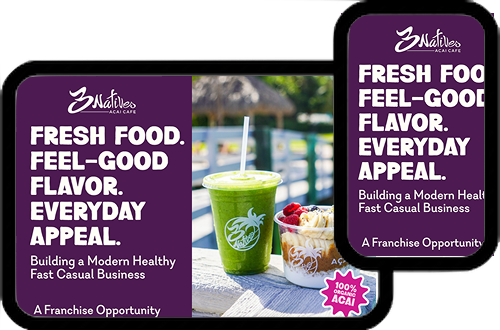
The 3Natives menu covers açaí bowls, smoothies, wraps, salads, and cold-pressed juices made fresh daily. These fit into everyday routines, which brings the same guests back through the week. Because 3Natives builds its bowls with fresh fruit, not frozen, each one offers a bright flavor and texture. The açaí base is the menu’s standout ingredient, blended to order for a rich, berry taste.
Community Roots That Build Loyalty
3Natives grows through local partnerships and neighborhood events. A cafe that shows up for its community becomes a regular stop, which supports steady repeat business. New owners meet the team at Discovery Day in Tequesta, Florida, where 3Natives began as a juice bar in 2013.
What To Know Before You Sign
A franchise asks for a real trade. You give up some independence and follow the system, and you pay to join and to operate.
3Natives’ Franchise Disclosure Document lists a total single-unit investment of $309,000–$524,000, which includes a $35,000 initial franchise fee. It also lists ongoing costs: a 6% royalty fee on gross revenues and a 2% marketing fee on gross revenues.
Review these numbers with an accountant or franchise attorney before you commit. The refrigeration-based kitchen also keeps equipment costs low, which can put the cost to open below many other healthy-food franchises. It helps to start by comparing franchise startup costs across similar concepts, then look closely at the 3Natives franchise opportunity.
“Know your numbers before anything else,” says Kristen Kessel, Director of Franchise Development at 3Natives Açaí Cafe. “The FDD puts the real investment and fees in writing, so read it closely and ask questions early.”
Frequently Asked Questions
What Are The Main Benefits Of Opening A Franchise Restaurant?
You start with a proven system, a recognized brand, real training, and marketing support, which lowers the guesswork that sinks many new independent restaurants.
Do I Need Restaurant Experience To Open A Franchise?
Most franchises train you from the ground up, and 3Natives guides new owners from signing through grand opening. Prior restaurant experience helps, but the system is built for first-time operators.
How Much Does It Cost To Open A 3Natives Franchise?
3Natives’ Franchise Disclosure Document lists a total single-unit initial investment of $309,000–$524,000, which includes the $35,000 initial franchise fee.
What Ongoing Fees Do Franchise Restaurant Owners Pay?
3Natives’ Franchise Disclosure Document lists a 6% royalty and a 2% marketing fee, each paid on gross revenues after you open.
Ready To Open A Healthier Kind Of Franchise?
The biggest benefit of opening a franchise restaurant is starting inside a system that already works, with people who want you to succeed. A hood-free, health-forward model like 3Natives makes that system simpler to run day to day.
“First-time owners do best when the model is easy to operate,” says Kristen Kessel, Director of Franchise Development at 3Natives Açaí Cafe. “A clean kitchen and a focused menu let you spend your energy on guests, not on kitchen complexity.”
Ready to see if the model fits your goals? Contact us today to learn more about this exciting franchise opportunity and take the next step toward ownership.