If you have started researching smoothie franchise opportunities, you have probably noticed something almost immediately: the same names tend to dominate the conversation. Tropical Smoothie Cafe, Smoothie King, Jamba, and Playa Bowls often appear early in the search process, and at first, that familiarity can feel reassuring. Brand recognition naturally creates confidence. When a concept has national awareness, established systems, and visible consumer demand, it is easy to assume much of the hard work has already been done.
But franchise ownership is rarely that simple.
The most recognizable brand is not automatically the smartest investment. A well-known concept may come with operational complexity that feels heavier than expected. A trend-forward brand may generate excitement while creating uncertainty around long-term staying power. A highly specialized concept may appeal to a narrower customer base than entrepreneurs initially realize. And for many people exploring franchise ownership, this decision is about far more than menu offerings or logos.
Most prospective owners are not simply comparing smoothie concepts. They are imagining a shift in their lives. They are thinking about building equity instead of collecting a paycheck, creating greater independence, owning something rooted in their community, or stepping into a business they feel genuinely excited to grow. When viewed through that lens, the question becomes less about which smoothie brand is the most famous and more about which business model offers the strongest opportunity to build something sustainable, scalable, and personally meaningful.
Increasingly, that realization is leading entrepreneurs toward a broader category conversation. Some of the most compelling opportunities in healthy fast casual are not traditional smoothie concepts at all. They are brands built around modern consumer behavior, repeat customer habits, and broader lifestyle alignment. That distinction matters more than many first-time buyers initially realize.
Why Smoothie Franchises Continue to Attract Entrepreneurs
There is a reason smoothie and health-forward fast-casual concepts continue attracting attention from franchise buyers. Consumer expectations around food have changed dramatically over the past decade. Convenience remains essential, but convenience alone is no longer enough. Today’s consumers increasingly look for meals and snacks that feel fresh, customizable, and aligned with healthier lifestyles. Breakfast has expanded beyond coffee and pastries. Lunch has shifted toward lighter, more flexible options. Snack occasions have become legitimate revenue opportunities, and wellness has evolved from a niche interest into a mainstream purchasing behavior.
That creates a compelling category for entrepreneurs, but smart buyers understand that the real opportunity is not simply in selling smoothies. It is in building repeat behavior.
A business built around a single occasional purchase behaves very differently than one that becomes part of someone’s routine. A post-workout smoothie may drive one visit. A concept that supports breakfast, lunch, afternoon snacks, wellness resets, and lighter meal occasions creates something much more valuable: habit. And habit is what sustainable franchise growth is built on.
That is one reason many entrepreneurs are expanding their view beyond traditional smoothie-only concepts and toward broader healthy fast-casual opportunities. Consumer demand continues moving in that direction, and for franchise buyers, timing matters. Categories do not remain under-the-radar forever. Entrepreneurs who identify strong behavioral shifts early often benefit from stronger positioning, greater flexibility, and more room for expansion.
What Smart Franchise Buyers Compare Before Choosing a Brand
It is easy to compare logos. It is much harder, and much more useful, to compare business models.
Brand awareness certainly matters, but recognition alone does not tell you how difficult a concept is to operate, how often customers return, or whether the ownership experience aligns with your personal goals. Smart franchise buyers evaluate deeper considerations.
Investment requirements naturally matter, but so do staffing expectations, operational complexity, training systems, support infrastructure, and overall ownership lifestyle. A franchise may look attractive on the surface while requiring a level of day-to-day management that feels overwhelming to a first-time owner. Another may offer broad consumer appeal but depend on narrower purchasing behavior than expected.
Menu diversity is another often-overlooked factor. Businesses that fit into multiple moments throughout the customer journey tend to create stronger repeat behavior than concepts tied to one narrowly defined purchase occasion. Ownership support matters just as much. Entrepreneurs are not simply buying a concept. They are buying confidence, systems, and the ability to move forward with clarity instead of uncertainty.
The strongest franchise opportunities make ownership feel both exciting and achievable.
Why Some Entrepreneurs Move Beyond Traditional Smoothie Franchises
This is often the turning point in the comparison process.
At first glance, smoothie franchises seem like an obvious healthy business opportunity. Consumer demand is visible. The category feels familiar. The product feels approachable. But as entrepreneurs begin evaluating ownership more seriously, many realize they are not actually looking for a smoothie business.
They are looking for a healthy fast-casual business with stronger long-term relevance.
That distinction changes the conversation.
Smoothie-only concepts can naturally create limitations because they are tied to narrower purchase occasions. By contrast, broader health-forward brands create more flexibility, more customer touchpoints, and more opportunities for repeat engagement. A concept that fits naturally into breakfast, lunch, snacks, and wellness behavior often creates a stronger operating model than one tied to a single category identity.
This shift in thinking is exactly why brands like 3Natives stand out differently.
Comparing Some of the Most Recognizable Smoothie Franchise Brands
Several recognizable brands tend to dominate the smoothie franchise conversation, and each brings different strengths.
Tropical Smoothie Cafe has built significant national awareness and offers a broader menu than beverage-only concepts, which naturally expands its appeal. That scale can create confidence, but it can also introduce greater operational complexity, larger staffing requirements, and a heavier ownership footprint than some entrepreneurs expect.
Smoothie King brings strong recognition and a clearly defined performance-focused identity. Its niche positioning appeals to health-conscious consumers, but tightly specialized brand identities can also create limitations depending on market demographics and local demand patterns.
Playa Bowls has built strong momentum through lifestyle branding and visual appeal. Its wellness-oriented positioning resonates with younger audiences and social-driven consumer behavior. That energy is attractive, but long-term ownership decisions require looking beyond aesthetics and asking whether the model creates broad, durable repeat behavior.
Jamba remains one of the most recognizable legacy names in the category, and that familiarity creates trust. But consumer expectations around healthy fast casual continue evolving, and legacy awareness alone does not determine future opportunity.
The most important takeaway here is not that any one competitor is stronger or weaker. It is that smart franchise comparisons require looking beyond brand recognition and into the mechanics of ownership.
Why 3Natives Creates a Different Franchise Opportunity
This is where the conversation becomes much more interesting.
3Natives was not built to be simply another smoothie concept. It was built around broader healthy consumer behavior.
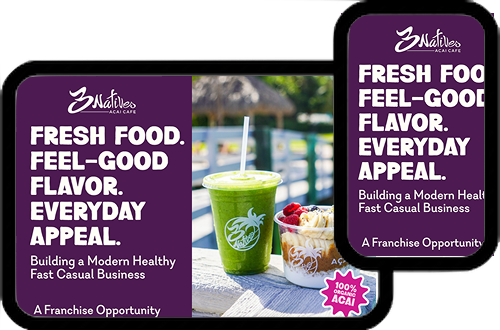
Yes, smoothies are an important part of the experience. But so are açaí bowls, wraps, salads, avocado toast, fresh juices, and other health-forward offerings that naturally create multiple reasons for customers to return throughout the week. That flexibility matters because repeat business is rarely built around one narrow customer need.
A customer may stop in after a workout one day, return for lunch between meetings the next, meet a friend for breakfast later that week, and stop in for a healthier afternoon option on another visit. That kind of natural lifestyle integration creates stronger repeat behavior and a more resilient ownership story.
For entrepreneurs, that translates into a different type of opportunity. Rather than relying on a narrower smoothie identity, 3Natives operates more like a modern healthy lifestyle brand aligned with how people actually eat today.
That distinction matters operationally, too. Broader daypart relevance can help create stronger traffic consistency, while the overall concept feels approachable for entrepreneurs who want a compelling business without unnecessary complexity.
Just as importantly, ownership is about more than menu design. It is about support, confidence, and infrastructure. The right franchise relationship should help entrepreneurs feel guided rather than overwhelmed. For first-time buyers especially, that emotional reassurance is a major factor in decision-making.
The Franchise Decision Is More Personal Than Most People Admit
Financial spreadsheets matter. Franchise disclosure documents matter. Operational planning absolutely matters.
But ownership decisions are rarely purely logical.
For most entrepreneurs, franchise ownership represents something much bigger than a business model. It represents freedom, autonomy, identity, and the chance to shape a future around their own effort. That emotional reality influences decision-making far more than many buyers openly acknowledge.
And it should.
Because opening a franchise is not simply about selecting a concept that works on paper. It is about choosing a business you genuinely want to build. One that fits your life. One you believe in. One that feels energizing rather than draining.
The strongest opportunities create both rational confidence and emotional momentum.
So, What Is the Best Smoothie Franchise?
The honest answer depends entirely on what you want to build.
If your primary goal is choosing the most familiar name, your answer may look one way. But if your decision-making centers around broader customer behavior, operational fit, ownership lifestyle, and long-term category relevance, the conversation becomes much more nuanced.
That is exactly why 3Natives deserves serious consideration.
The most compelling franchise opportunities are not always the ones consumers have known the longest. Often, they are the ones aligned with where consumer behavior is heading next.
Build Something That Feels Good to Own
The right franchise opportunity should absolutely make sense on paper.
But it should also feel like something you genuinely want to build.
Consumers continue prioritizing wellness, convenience, customization, and healthier fast-casual experiences. That creates meaningful opportunity, but not every concept captures that opportunity equally.
If you are comparing smoothie franchise opportunities, the smartest next step may not be another generic comparison list. It may be asking whether a broader healthy fast-casual concept better aligns with the kind of business, ownership experience, and future you actually want to create.
For entrepreneurs looking for a concept that feels modern, flexible, and aligned with how people actually eat today, 3Natives offers a compelling opportunity worth exploring.
FAQs
What is the best smoothie franchise to own?
The best smoothie franchise depends on your goals, market, investment comfort, and desired ownership experience. Some entrepreneurs prioritize brand familiarity, while others focus on operational flexibility, menu diversity, and long-term category relevance.
How much does it cost to open a smoothie franchise?
Startup costs vary significantly depending on the concept, location, and operational model. Healthy fast-casual franchise investments can range from several hundred thousand dollars to well over $1 million.
Are smoothie franchises profitable?
Profitability depends on many factors, including location, labor costs, customer demand, operating efficiency, and brand model. Smart buyers evaluate the full business model rather than relying on brand awareness alone.
Why is 3Natives different from other smoothie franchises?
3Natives offers a broader healthy fast-casual menu that extends beyond smoothies into açaí bowls, wraps, salads, toasts, and juices. That creates more daypart flexibility and stronger repeat customer potential.